Archive for June, 2010

Book Review: Engage!

When I put together my reading list for 2010, I included Putting the Public Back in Public Relations by the prolific Brian Solis as one of my 2010 “must reads.” Surprisingly, though, it turned out not to be the first of his books I read this year. The good folks over at Wiley sent me a review copy of his latest book, Engage!, which I’ve just finished reading.

Engage! leads the reader through a pretty comprehensive look at the ins and outs of social media-based public relations. How comprehensive? Well, after a two-chapter introduction, Solis launches into an 11  (count ‘em) chapter “new media university” course going from defining new media, to intros to a large number of tools, to the social media ecosystem as it currently stands. This fits with the target audience – Engage! is firmly targeted at people those who are new to using the tools for business. Other people can safely skip these 120 or so pages, or dip in and out as needed.

Once you’ve completed your “new media university” education, Engage! then explores some core basic facets of business social media covering:

  • The social media mindset
  • Basics of listening, engagement and audience/influencer identification
  • Developing a corporate social media approach
  • Current developments such as location-based tools, social CRM and VRM (vendor relationship management)
  • Practical pointers including measurement approaches

Together, these topics provide a good run-through of all of the foundational elements of social media that you’ll need to know when you’re starting out. Not only does the book cover a wide range of tools; it nonetheless manages to avoid taking a tool-centric (which would almost immediately be out of date) and works in sound elements of communication strategy and broader social media principles.

For those of us who are already familiar with the basics, the book also offers some interesting content later on, with the sections on emerging practices such as social CRM and measurement being highlights. The measurement section, in particular is useful, not for any original insights but for combining a variety of measurement approaches into one place for easy reference.

If I had to offer one criticism, it would be that the book needs a good editor. Engage! is an overly lengthy tome – while most books come in at around 240-280 pages, this one runs to 348. Solis’ blog posts are often lengthy affairs, so this won’t be a surprise to anyone familiar with his work. However, it feels like there’s a normal amount of content within those 348 pages. The book would have been a more useful and enjoyable read with the benefit of this.

Good editing would have also solved the other primary problem with the book – that there’s no discernable flow or narrative throughout the book. Some other recent reads like Chip & Dan Heath’s Switch and Daniel Pink’s Drive lay out a clear path that makes it easy to know where you are in the book. There’s no such signposting here, and no noticeable path to follow. This can be a bit disconcerting at times as the book ping-pongs back and forth between topics.

These quibbles aside, I did enjoy reading Engage!. Having read all 348 pages, I can happily recommend that anyone familiar with social media skip the first half of the book; however you may well find some useful resources in the latter half. If you’re new to social media for business, however, Engage! is as comprehensive a guide as I’ve seen.

Earthquake: Canadians Turn to Social Media Instead of Diving for Cover

Yesterday afternoon at 1:41pm EDT, a 5.0 magnitude earthquake shook Quebec and Ontario and it looks like people ran to Twitter instead of diving for cover. Once again, social media beat traditional media to the punch (as if this is news nowadays), although mainstream outlets were quick to report the news shortly thereafter.

We did a little research on social media activity regarding the earthquake using Radian6. Some interesting stats:

  • Prior to the earthquake, there were approximately 100-300 mentions of earthquakes on social networks per hour.
  • There were over 31,000 mentions of earthquakes between 1 and 2pm today. That number doubled to almost 65,000 mentions in the hour following the earthquake (between 2 and 3pm).
  • There have been roughly 170,000 mentions of the earthquake since the earthquake began.
  • The first tweet was posted just seconds after the earthquake began at 1:41:41 EST.
  • Users generally decided to tweet the news rather than update their Facebook statuses. While many Facebook updates are private, publicly available updates were outnumbered by tweets by about 8 to 1.

While a majority of the tweets and updates were tinged with surprise, it’s nice to know people hadn’t lost their sense of humour. A few of the funnier posts on Twitter included:

  • “The earthquake triggered a tsunami at the G20 fake lake” – @AndrewFstewart
  • “The earthquake in Toronto was just thousands of England fans jumping back on the bandwagon” – @mlse
  • “That wasn’t an earthquake. It was just Quebec trying to separate.” – @stevepayne
  • “Widespread disappointment across Toronto at news that it was not, in fact, the epicentre of the quake” – @ivortossell
  • “So #earthquakes actually improve the TTC. Go figure. RT @680News: TTC fully operational.” – @josephdee

Erin Bury has a great post on some other funny tweets over at BlogTO.

This is another example of the power of social media in providing up-to-the second news in a way that would have been unimaginable a few years ago.

Update: Interesting post from Joe Boughner on whether it really matters that social media beat the mainstream media to the punch. My take: I like Joe’s points, and Twitter certainly plays a different role to mainstream journalism – it’s not about substantial coverage in the same way. However, in a world where traffic (and ad dollars) flows to the first piece of substantial coverage on the event, being first does matter.

It’s A Small World

Last September I had a chance encounter in Montreal. I was in town for PodCamp Montreal, walking along the street to meet up with Julien Smith and a bunch of other folks, when I bumped into my ex-housemate. Turned out she’d decided to take a random trip to Montreal and by a bizarre coincidence we bumped into each other. Small world.

Why am I writing about this on this blog?

Because the PR world is a small one, especially in Canada. As experience after experience has taught me, you will keep running into people long after you’ve ceased working with them (just last week I had the pleasure of presenting to my ex-government colleagues at an event they held, which felt like a reunion).

The impressions you leave people with, and the way you treat others, will stay with you for a long time. Everyone in our industry should remember that at all times. That goes especially for people at the beginning of their careers – the odds are fairly significant that you’ll run into people again down the road – but, I think, applies to everyone at all stages of their career path.

I was working on a presentation this week which Yasmine Kashefi and I are giving to her old school at Centennial College next week. One of the key career tips we landed on was remembering that the work doesn’t end when you land a job; it begins. Likewise, your reputation-building activities continue throughout your career.

Out of sight does not mean out of mind. What’s more, being visible online means you’re never out of sight.

It’s a small world.

Mobile Commerce On The Rise… Fast

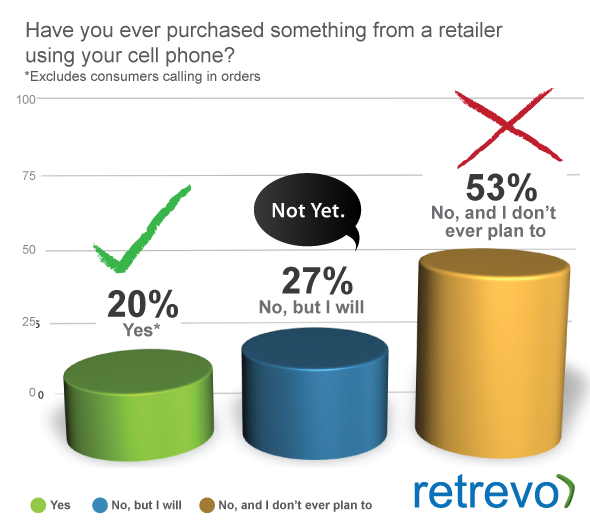
Electronics marketplace Retrevo this week released a new study suggesting that mobile shoppers have doubled since February. According to the company, 20 per cent of US consumers have purchased something from a retailer using their cell phone.

While this isn’t a surprising trend, the fact that mobile commerce is growing so quickly is somewhat surprising. If nothing else, it would seem to indicate that the ever-increasing prevalence of smart phones is having a very noticeable impact.

I’m excited to see how this trend continues over the next few months. It’s hard to name an industry that isn’t affected at some level by the growth in smartphone technology, from fast food (Pizza Hut iPhone app, for example), to television content (Rogers On Demand Mobile). With the popular launch of the iPad, which has already drastically increased the amount of content I consume each day, I think there’s even further to go.

Interestingly, the company suggests that credit cards might be getting in the way of mobile commerce growing even faster than it already is, saying, “if you want more sales from mobile customers, make it easy for them to store their credit card info…” They link that to the question, “if retailers can’t get the credit card out of the way, how about the carriers?” In Canada, the cellphone carriers have put their weight behind Zoompass – a joint venture of the main telcos which is working on the evolution of the mobile wallet on a platform that works across the carriers .While this has also happened out in Japan, I’m not aware of any such move in the US.

Other statistics from the study:

Have you ever purchased something from a retailer using your cell phone?

  • 20% Said yes
  • 27% Said no, but that they would purchase something from their cell phone eventually
  • 53% Said no, and that they don’t ever plan to

What would make you more likely to purchase something from a retailer using your cell phone?

  • 24% Said, not having to provide their credit card info
  • 13% Said if their credit card was stored with the retailer
  • 16% Said they’re comfortable making purchase from their mobile phones now

What about you? Do you already make purchases via your mobile phone? If not, what would make you more likely to start?

(Disclosure: Rogers and Zoompass are both Thornley Fallis clients)

Social Mediators 8 – What Do You Want From A Conference?

In this week’s Terry FallisJoseph Thornley and I talk about what makes a good conference experience – and what makes for a bad conference.

Personally, I look for four things:

  1. Knowledgeable, expert speakers who will speak from experience
  2. Opportunities to meet speakers and other participants from whom I can learn
  3. Reflecting the new mobile working environment – lots of WiFi and charging stations for electronic devices
  4. Lastly, and crucially, I find that as I attend more and more events, I get less value from the sessions (although they are still valuable) and more value from the hallway conversations – from finding a handful of interesting attendees with whom I can hang out, get to know better and learn from. These encounters lead to lasting relationships for me, so I appreciate events that facilitate that interaction.

Terry Fallis looks for speakers with a fresh perspective on their subject matter and who also are good presenters. Substance plus performance.

Joe wants at least one new good idea from each speaker. If he gets that, the conference is worthwhile. If not, he’ll exercise the law of two feet and head out to do some work.

Conference No-No’s:

  • Faulty WiFi
  • Slides that don’t work
  • Worst of all, speakers who turn to face their slides and read the words directly off them (We can read. We don’t need speakers to read their slides to us. Surely, there must be something more to what they want to say than they could fit on a PowerPoint slide.)

The biggest annoyance of all:

Product pitches from speakers. I’ll walk out of sessions where the presentation becomes a product pitch.

What about you?

Sysomos Audience Moves Towards Measuring Social Media ROI

Social media ROI is a hot topic right now, as social media begins to (slowly) mature. The purists who insisted that the conversation alone was and end, rather than a means, are diminishing in volume and a more rational, approach is emerging balancing the revolutionary aspects of social media with those that are simply evolutionary from existing business practices.

One area in particular which is fast-evolving is social media monitoring (my ex-colleague Michael O’Connor Clarke quipped last week that there’s probably a micro-industry dedicated to watching it).

After several weeks of back and forth, and rescheduled meetings, I finally managed to get a demo of Sysomos Audience last week. I came away impressed.

Placing a Value on your Visitors

Sysomos Audience is an addition to the Heartbeat monitoring and engagement tool. At first glance it seems similar to Google Analytics in nature – in fact, I previously under the incorrect impression it simply connected social media traffic to web analytics. However, Audience really focuses in a different direction, providing tools that should pique the interest of your sales, marketing and community management folks alike.

Audience tracks visitors to your site alongside their previous web activity, and helps to determine whether each person is a real lead or is just browsing. It does so by examining peoples’ previous web activity, including competitors’ websites, blogs, social networks and so on. In doing so, it determines whether your visitors are qualified leads or just browsing. For example, people are much more likely to be serious sales leads if they’ve been researching other competitive products first than if they’ve just clicked through from a random site.

Critically, Audience also lets you assign a dollar value to visitors based on their visits to competitor sites, to help determine the ROI of your social media activities. It does so by letting you assign values for visits to different areas of your site (those key to your sales funnel might have a higher value, for example) and other factors. In doing so, you gain a relative value for each visitor to your site. This might seem familiar to web analytics (Google Analytics lets you assign goal values, for example) but this goes above and beyond by incorporating activities outside your own site, and by aggregating values per user.

This has implications for several functions within companies:

  1. Sales
  2. Community management
  3. Public relations

Sales

Sales folks – wouldn’t you like to know who your most valuable leads are right at the beginning of the process, so you can prioritize them accordingly? While Audience generally only provides generic tracking information for most people, if you hook the system into any web forms you have, it can link their name and information into their activities (note: you’ll likely need to amend your privacy policy in order to do this). Right now, the system doesn’t hook into Salesforce but according to Sysomos co-founder Nilesh Bansal, that functionality is on the way.

Community Management

Just as Audience lets you track your most valuable visitors, it also lets you identify the sites that are the source of the most valuable traffic to your website. In the demonstration I saw, for example, I saw that while TechCrunch drove a lot of traffic to Sysomos, the traffic from other sites on a per-user basis was actually worth more to them. For community managers, pulled in a thousand directions, this can be valuable information to help them prioritize their focus.

Public Relations

The idea of being able to place a value on the traffic from a piece of coverage is mouth-watering to me. For one, it gives a great answer to the “what’s the ROI of this pitch” question (which even traditional media relations hasn’t solved yet) but also it helps you to figure out who you need to build relationships with and on whom you should focus your pitching. Of course, it doesn’t remove the hands-on targeting and tailoring work that goes into each project, but this kind of data would still be immensely valuable.

Privacy Concerns?

The only question that worried me during the demo I received revolved around online privacy. How does Audience determine which sites people have visited recently? Every site I’ve seen reviewing Audience – from TechCrunch to ReadWriteWeb to Web Metrics Guru – have wondered but no answers are forthcoming. While Sysomos doesn’t currently pull user profiles in, it’s only a small step from there to linking a Twitter or Blogger profile into things and having a complete record of your visitors’ browsing habits. That’s hypothetical but a little concerning as I’m sure they’ll experience pressure to add that feature.

Sysomos’ Nilesh Bansal wouldn’t shed any light on the question when I spoke with him. He told me they don’t look at cookies, but that Audience uses a piece of JavaScript code which you embed on your site and correlates that with their social media monitoring database. So, how do they know people have been on a competitor’s site? It sounds a little dubious to me. As long as they don’t shed any insight into this, people will continue to wonder what’s going on.

Exciting Potential

Setting aside the privacy concerns for a moment, Audience really does have a lot of potential, especially if you’re already a Sysomos client. The product is still in closed beta testing for now and Sysomos hasn’t announced pricing but, like Radian6′s engagement console, this looks to be a differentiating addition to Sysomos’ portfolio of services. I do think they need to answer the privacy questions, though.

What’s your take?


Social Mediators 7 – Eqentia – Social Media Monitoring Tool For Enterprises

Eqentia is a social media startup headquartered in Toronto, Canada. In this week’s episode of Social Mediators, Eqentia’s CEO and Founder, William Mougayar, joins Joe Thornley and me for a discussion about Eqentia, what it does, who it’s aimed at and future plans for it.

Eqentia is positioning itself as a team-based knowledge dashboard that can be managed by one or two users, freeing others from the need to set up and refine searches. William hopes that managers will turn to it each day to answer the question, “What’s new that I need to know about?”

Eqentia’s text mining engine promises to deliver content to users in near realtime, providing them with an up to the minute picture of conversations and references to their brands and issues of interest.

William sees Eqentia becoming a productivity tool for medium and large enterprises. Initially, power users can curate the content to ensure that the highest relevance and most valuable content is featured, saving time and effort for the rest of the team. Once the principal user has set up the tool and refined the settings so that it focuses on the company’s specific interests, other team members will have access to the data without the need to manage the sources, relevancies and advanced filters and settings that make all of this possible.

Eqentia will be most attractive to teams that have both power users and executives who don’t care about how to use the tool, but just want to see its output. The power users can publish the information in user-friendly form for the end users – via email, Twitter, RSS feeds, or by giving end users access to individual topics.

Unlike many other social media tools that focus on providing users with the ability to build folksonomies by applying multiple tags, Eqentia incorporates predefined taxonomies to standardize searches and make it easy for end users to find the same data set with a simple search.

Still to come in Eqentia’s development – a comprehensive approach to social media metrics.

The company has some potential client deals in the works and hopes to be able to begin to announce these in the near future.

Eqentia has been seed funded by Extreme Venture Partners, who also funded Bump Top, which was recently acquired by Google. William says that he had the funding to carry on with the development of the product and to explore its marketing potential.

Have you tried Eqentia? What are your thoughts about it?

Why I’m Writing This On An iPad

When the iPad came out I was vehemently against the idea of getting one, for several reasons:

  1. No multitasking
  2. No flash video
  3. No USB

I railed against the device online, I said similar things on the Social Mediators show and I argued against getting one privately.

How things change. I’m writing this post on my shiny new iPad, while sitting on a plane to Montreal.

Why the U-turn?

Several key reasons.

  1. Testimonials
  2. Travel
  3. Multitasking (soon)
  4. Convenience
  5. Work

1. Testimonials

Study after study shows that peers and word of mouth are central to purchase decisions. Every year, Edelman publishes its “Trust Barometer” study, and time after time it shows that we trust “people like us.” Well, since the first release of the iPad I’ve seen peer after peer obtain these devices and rave about the freedom and flexibility they gain when they do so. I’m not going to lie, this was a primary driver in my decision to purchase an iPad.

2. Travel

In addition, as my frequency of travelling increases, I’ve begun to long for a device which I can pull quickly and easily on a plane or in an airport lounge. My laptop just didn’t cut it from an ease-of-use perspective. When I had to power down ahead of take-off, I just hit a button and slid the iPad into the seat-back in front of me. Nice and easy.

3. Multitasking

When Steve Jobs first announced the iPad, I was dismayed that it wouldn’t support multitasking. I want to be able to deal with email while having alerts for new Twitter replies, or to flip back and forth between a game and a blog post. Fortunately, the upcoming OS update will take care of that so it’s no longer an issue.

4. Convenience

I cant count the number of times when I’ve wanted to quickly find something online, order delivery or show Caralin a neat video but haven’t wanted to wait for my laptop to boot up. The iPad boots instantly and is small enough to keep on-hand when you’re lazing around the house – perfect for couch surfing. What’s more, as with the iPhone, the web browsing is a dream compared to my Blackberry.

5. Work

Ok, this maybe me rationalizing a bit, but if I’m going to be on top of my game i think I should have some idea about the latest trends. I make a point of it with software; i think it’s important with innovative new hardware too. Case in point: within minutes of tweeting about buying the iPad, I received a call on my cell from a client asking about it. Frankly this isn’t the main reason for me buying this but it was a small factor.

Now, I’m not going to pretend this is a “magical” device as Jobs would have us believe. The keyboard takes some getting used to (placement of the space bar in particular), and I’m still incensed by the lack of Flash. A camera for video chat might be nice, although the device is too heavy to be used as a regular camera in other regular situations. However, the pros outweigh the cons for me at this point.

What do you think? Have you or will you get an iPad?